Introduction: Trust Is the New Currency in Healthcare Marketing
After years of working in SEO, affiliate marketing, and performance-based campaigns, one thing has become very clear:
In healthcare, trust is more important than price, location, or even specialization.
Today, patients don’t simply walk into clinics. Before booking an appointment, they usually:
Search the doctor’s name on Google
Visit Instagram or Facebook profiles
Read posts, comments, and reviews
Observe how active and transparent the clinic is online
This is exactly why social media marketing plays a critical role in helping doctors and clinics build trust.
In this article, I’ll explain how social media marketing helps doctors and clinics build trust, not in a theoretical way, but based on real-world marketing experience, conversion behavior, and patient psychology.
What Does Social Media Marketing for Doctors and Clinics Mean?
Social media marketing for doctors means strategically using platforms like Facebook, Instagram, and YouTube to communicate with patients, educate them, and build long-term trust.
It is not about posting random images or promotional offers.
From an affiliate marketer’s perspective, social media marketing is about:
Building authority
Creating familiarity
Reducing fear and hesitation
Establishing trust before the appointment
For doctors, social media becomes a powerful digital trust-building tool.
Why Trust Is More Important Than Ever in Medical Marketing
Healthcare is a high-trust industry.
Patients don’t just buy a service; they place their health, privacy, and emotions in a doctor’s hands.
From years of funnel optimization, one truth stands out:
Patients book appointments only when trust outweighs fear.
Social media marketing works directly on this principle by:
Lowering fear
Increasing confidence
Making doctors feel approachable
How Doctors and Clinics Can Build Trust Through Social Media Marketing
Let’s break this down step by step.
1. Social Media Makes Doctors Visible and Familiar
People trust what they see repeatedly.
When patients regularly see:
Doctor posts
Educational videos
Clinic updates
Reels explaining health topics
They start feeling familiar with the doctor even before meeting them.
In affiliate marketing, this is known as the familiarity effect.
Result:
Patients feel like they already “know” the doctor, which builds instant trust.
2. Educational Content Positions Doctors as Experts
Sharing knowledge is one of the strongest trust signals.
Doctors who post:
Health tips
Symptom awareness content
Myth vs fact posts
Preventive care advice
Naturally position themselves as experts.
From experience, educational content always outperforms purely promotional content.
Result:
Patients trust doctors who educate, not just advertise.
3. Engagement Creates Social Proof
People trust other people.
When patients see:
Positive comments
Questions answered publicly
Active engagement on posts
It creates social proof.
In performance marketing, social proof dramatically reduces hesitation.
Result:
New patients feel reassured by others’ interactions.
4. Social Media Humanizes Doctors Beyond the Clinic
Traditional marketing often presents doctors as distant professionals.
Social media shows:
Doctors speaking casually
Behind-the-scenes clinic moments
Team introductions
Participation in awareness campaigns
This human side builds emotional comfort.
As affiliate marketers know well:
People don’t buy from brand, they buy from people
Result:
Patients feel more comfortable approaching the doctor.
5. Consistency Builds Long-Term Trust
Trust is not built with one post.
Doctors who post consistently:
Appear reliable
Show commitment
Stay top-of-mind
Consistency signals stability.
From years of campaign data, brands that show up consistently always outperform those that don’t.
Result:
Patients trust clinics that remain active and visible.
6. Social Media Reduces Patient Anxiety Before Visits
Many patients feel nervous before visiting a doctor.
Social media content that:
Explains procedures
Shows the clinic environment
Introduces staff
Clears common doubts
Reduces uncertainty.
In affiliate funnels, this is called pre-selling.
Result:
Patients arrive at the clinic more relaxed and confident.
7. Direct Interaction Builds Real Trust
Social media allows direct communication through:
Comment replies
Direct messages
Polls and Q&A sessions
This two-way interaction is extremely powerful.
From experience, direct-response communication builds trust faster than one-way marketing.
Result:
A stronger patient–doctor connection even before the appointment.
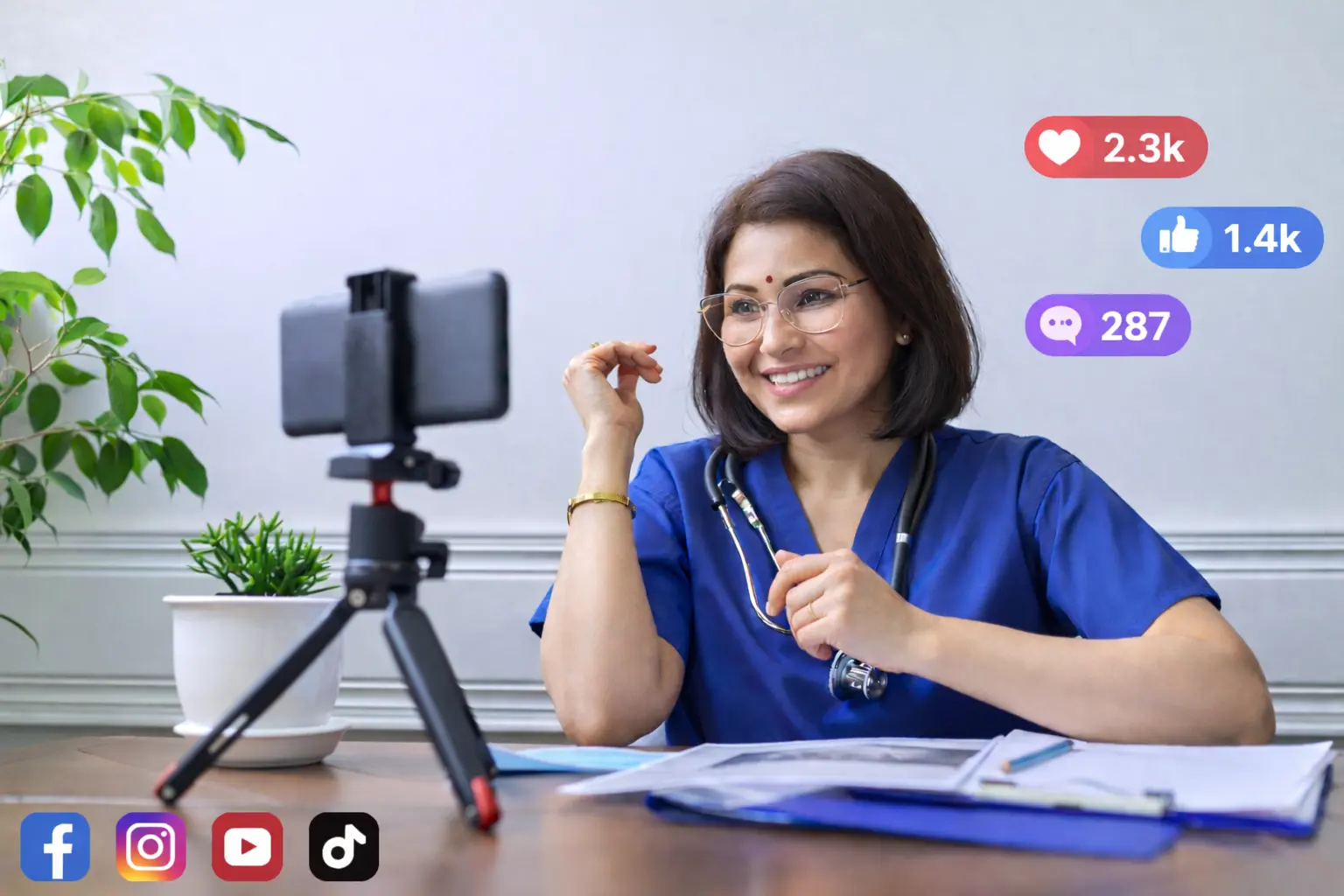
8. Video Content Builds the Highest Level of Trust
In affiliate marketing, video is the most trusted content format.
For doctors, video content like:
Reels explaining conditions
Short educational videos
FAQ videos
Demonstrates:
Confidence
Clarity
Authenticity
Result:
Patients trust faces and voices more than text alone.
9. Social Media Strengthens Online Reviews and Reputation
Social media acts as a reputation validation layer.
When patients:
Find a clinic on Google
Then visit social media profiles
Active and professional profiles reinforce their decision.
Result:
Higher appointment conversion rates.
10. Social Media Strengthens All Other Marketing Channels
In affiliate marketing, no channel works alone.
Social media supports:
Website credibility
Google Ads conversion rates
SEO trust signals
Retargeting campaigns
When ads lead to active social profiles, trust increases immediately.
Result:
Better ROI across all marketing efforts.
Common Social Media Mistakes Doctors Make
Honest advice from experience:
Posting only promotional content
Being inconsistent
Ignoring comments and messages
Using copied or generic content
Avoiding video completely
Social media is not about perfection.
It’s about presence and authenticity.
Frequently Asked Questions
1. Why is social media marketing important for doctors?
It helps doctors build trust, educate patients, and create familiarity before appointments.
2. Which social media platforms work best for doctors?
Facebook and Instagram are most effective for engagement, education, and trustbuilding.
3. Can social media really increase patient trust?
Yes. Consistent, educational, and authentic content significantly improves patient confidence.
4. How often should doctors post on social media?
Posting 3–5 times per week is ideal for building trust without overwhelming followers.
5. Is video content necessary for doctors?
Video is not mandatory, but it builds trust faster than images or text.