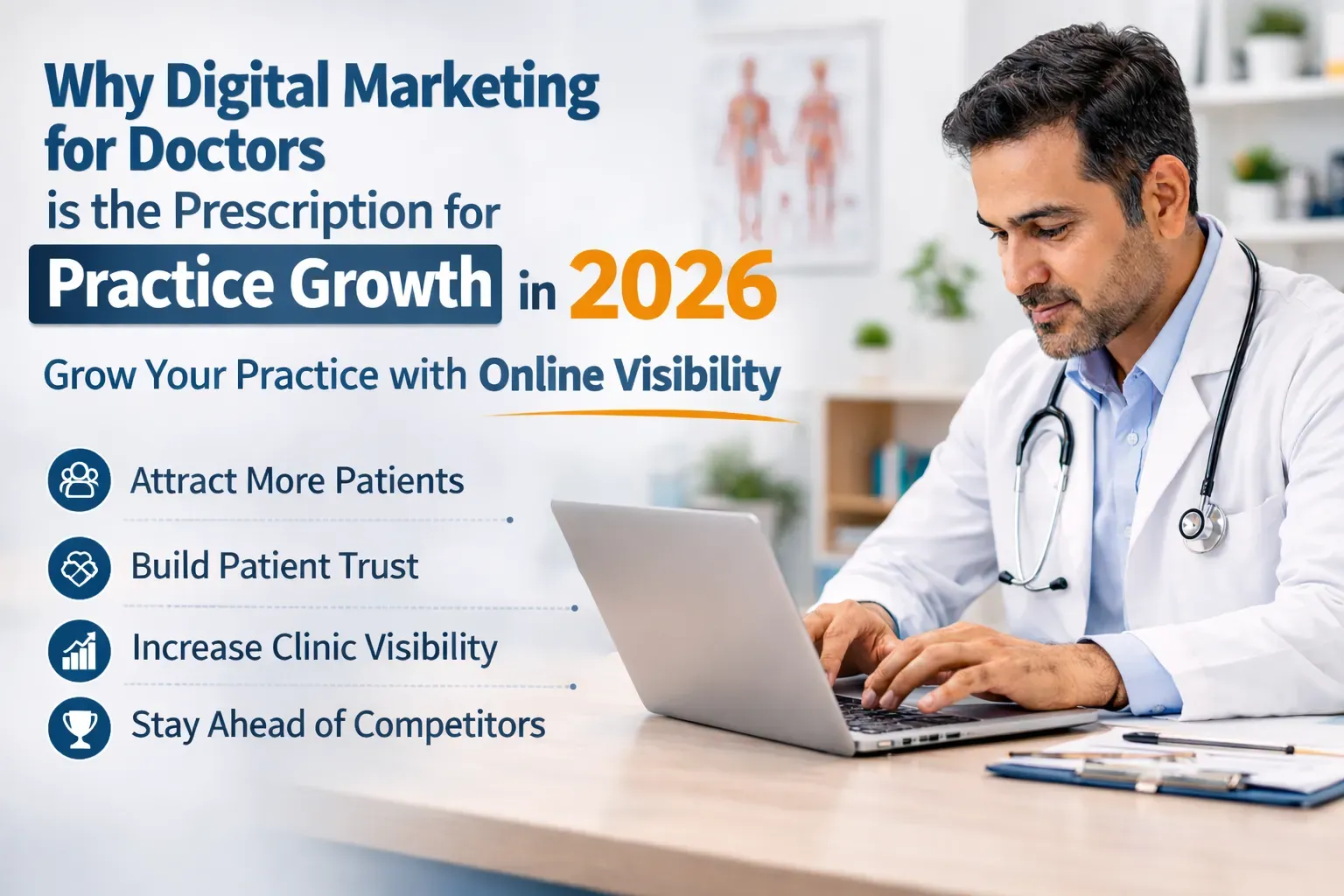
In 2026, the patient journey doesn’t start in the waiting room; it starts on a smartphone. With the integration of AI-driven search and highly personalized healthcare discovery, a doctor’s online presence has become as critical as their medical degree for building a sustainable practice. If you aren’t visible where patients are searching, you are effectively invisible to the modern healthcare consumer.
This guide explores how digital marketing for doctors has evolved and why a strategic approach to healthcare marketing is the most effective way to build trust, authority, and a consistent patient flow in today’s competitive landscape.
Navigating the Digital Health Landscape
The shift toward online marketing for doctors is driven by the “informed patient” era. Patients no longer rely solely on referrals; they validate every recommendation through search engines and social proof.
Primary Focus: Digital marketing for doctors is now centered on “Experience, Expertise, Authoritativeness, and Trustworthiness” (E-E-A-T).
Core Strategy: Success requires a blend of digital marketing for clinics, local SEO, and Internet Marketing for Doctors that prioritizes patient education over hard selling.
The Goal: To move from a “transactional” relationship to a “trusted authority” status before the patient even books their first consultation.
The Foundations of Online Marketing for Doctors
To achieve 2026-level growth, your strategy must move beyond a simple static website. Digital Promotion for Doctors now requires an ecosystem where every digital touchpoint serves a specific purpose in the patient acquisition funnel.
1. High-Performance Website: Your Digital Clinic
Your website is no longer just a digital brochure; it is a functional tool. For effective digital marketing for clinics, your site must feature:
One-Click Scheduling: Integration with CRM systems for seamless booking.
Lightning Speed: Patients will abandon a site that takes more than 3 seconds to load.
Educational Hubs: Deep-dive sections on treatments that answer specific patient “pain points.”
2. Mastering Local SEO: Being Found in the “Near Me” Era
When someone searches for a “specialist near me,” Google’s local map pack is the prime real estate. Healthcare marketing in 2026 relies heavily on:
Optimized Google Business Profiles: Frequent updates, high-quality photos of the clinic, and direct interaction with patient questions.
Hyper-Local Keywords: Using phrases like “best cardiologist in [City Name]” or “pediatric clinic near [Neighborhood].”
Review Management: A consistent flow of 4- and 5-star reviews is the strongest currency in online marketing for doctors.
Strategic Content: Beyond Just Blogging
Content is the bridge between a stranger and a patient. In the realm of Internet Marketing for Doctors, generic content is dead. High-value content must be:
Video-First: Short-form videos (Reels/Shorts) explaining common procedures or debunking medical myths.
Patient-Centric: Articles that focus on “How to prepare for surgery” or “5 signs you need to see a specialist” rather than just listing your awards.
AI-Optimized: Structuring data so that AI search engines (like Gemini or Search Generative Experience) can easily pull your clinic’s info as a recommended answer.
The Power of Precision: Digital Promotion for Doctors
Organic growth is vital, but paid Digital Promotion for Doctors provides the “booster shot” needed for rapid scaling.
| Platform | Benefit for Doctors | Best Use Case |
| Google Ads | High Intent | Attracting patients actively searching for specific treatments. |
| Meta Ads | Visual Storytelling | Building awareness for elective procedures (Cosmetic, Dental, Wellness). |
| Professional Networking | B2B marketing for diagnostic labs or specialized surgical centers. |
Compliance and Ethics: The Non-Negotiables
In healthcare marketing, the rules are stricter than in any other industry. Trust is built on safety and privacy.
Data Privacy: Ensure all lead generation forms are encrypted and compliant with local healthcare data laws.
Authenticity: Never use stock photos that look “too perfect.” Use real photos of your team and clinic to build genuine connection.
Fact-Checking: Every claim must be backed by clinical evidence to maintain your “Expertise” rating with search engines.
Measuring ROI: Data-Driven Practice Growth
You cannot manage what you do not measure. A successful digital marketing for doctors campaign tracks:
Patient Acquisition Cost (PAC): How much you spend to get one new patient through the door.
Call Tracking: Identifying which keywords or ads lead to actual phone inquiries.
Retention Rate: Using digital newsletters and patient portals to keep your practice top-of-mind for follow-ups.
FAQs: Common Questions on Digital Marketing for Doctors
Q1: How does digital marketing for clinics differ from general business marketing?
Healthcare marketing requires a higher level of sensitivity and compliance. While a retail brand can use “FOMO” (Fear Of Missing Out), doctors must use “E-E-A-T” (Experience, Expertise, Authoritativeness, and Trust) to ensure they don’t violate ethical codes or search engine guidelines regarding medical information.
Q2: Is social media really necessary for specialized doctors?
Absolutely. Internet Marketing for Doctors on social media isn’t about being an “influencer”; it’s about humanizing your practice. It allows patients to see your bedside manner and professional environment before they arrive, which significantly reduces “white coat syndrome” and increases booking rates.
Q3: What is the most cost-effective way to start online marketing for doctors?
Start with Local SEO. Optimizing your Google Business Profile and gathering authentic patient reviews costs very little compared to paid ads but offers the highest long-term ROI for attracting local patients.
Q4: Can digital marketing help in reducing patient no-shows?
Yes. Modern digital marketing for clinics includes automated email and SMS reminders, as well as educational “prep” content sent to the patient before their appointment, which keeps them engaged and reduces the likelihood of a missed visit.
Q5: How long before I see results from healthcare marketing?
While paid ads (PPC) can generate leads within days, organic strategies like SEO and content marketing typically take 3 to 6 months to show significant growth. However, the organic results are more sustainable and build long-term practice equity.
Conclusion: Your Move Toward a Smarter Practice
The digital landscape of 2026 rewards doctors who are transparent, accessible, and authoritative. By implementing a robust strategy for digital marketing for doctors, you aren’t just “advertising” you are making it easier for patients to find the care they need. From online marketing for doctors to high-level healthcare marketing, the goal remains the same: building a bridge of trust between your expertise and the patient’s needs.