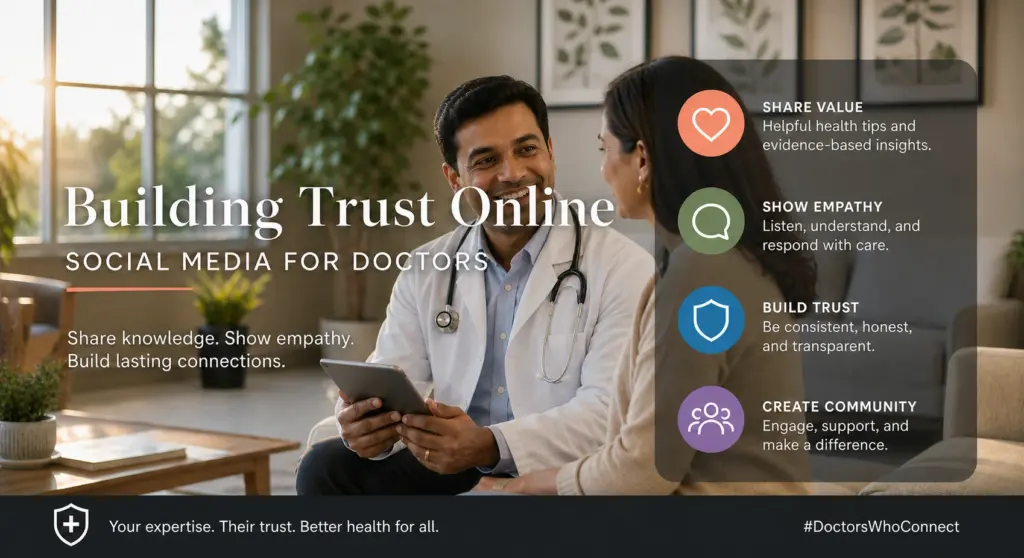
The doctor-patient relationship has evolved dramatically over the past decade. Today’s patients don’t just find physicians through referrals and insurance directories; they research doctors on social media, read reviews, watch educational videos, and evaluate online presence before ever making an appointment. For medical professionals, establishing credibility and building trust now begins long before the first consultation.
Social media for doctors isn’t just about marketing. It’s about creating meaningful connections, educating communities, and humanizing healthcare. When done strategically, your social media presence becomes a powerful tool for patient acquisition, retention, and practice growth.
At DigifyClinic, we help doctors and healthcare brands navigate the unique challenges of medical social media marketing. Our healthcare-focused expertise ensures you build trust online while maintaining complete HIPAA compliance and professional standards.
This comprehensive guide explores how physicians can leverage social media to establish authority, connect with patients, and grow their practices, all while avoiding common pitfalls that can damage reputations or violate regulations.
Why Social Media Matters for Doctors
Patients Expect to Find You Online
Seventy-two percent of internet users search for health information online, and sixty percent specifically look for information about doctors and healthcare providers on social media platforms. Patients want to know who you are, what you stand for, and how you approach care before they trust you with their health.
A strong social media presence signals that you’re accessible, current, and engaged with your community. Doctors who maintain active, professional social media profiles are perceived as more approachable and trustworthy than those with no online presence.
Conversely, the lack of a social media presence raises questions. Younger patients, especially, may wonder whether a doctor without any online footprint is keeping up with modern medicine and technology.
Building Credibility Through Consistent Communication
Social media for doctors provides a platform to demonstrate expertise beyond the exam room. When you share evidence-based health information, comment on medical developments, and answer common questions, you position yourself as a knowledgeable authority in your field.
This educational approach builds trust incrementally. Each valuable post reinforces your credibility and keeps your practice top-of-mind when patients or their family members need medical care.
Social platforms also allow you to showcase your personality and values. Patients increasingly choose doctors based on personal connection and shared values, not just clinical qualifications. Social media lets you communicate who you are as a person, not just a medical professional.
Competitive Differentiation
In competitive medical markets, social media for doctors creates differentiation. When patients compare multiple providers offering similar services, your social media presence can be the deciding factor.
A practice with engaging content, patient testimonials, health tips, and behind-the-scenes glimpses into their team stands out from competitors with minimal or no social presence. You’re not just another name in a directory; you’re a real person they feel they already know.
Direct Patient Education Platform
Misinformation about health topics spreads rapidly on social media. As a physician, your voice can counter myths and provide accurate, science-based information to your community.
When you address trending health topics, seasonal concerns, or common misconceptions, you provide genuine value to your audience. This educational mission aligns perfectly with building trust; patients appreciate doctors who take time to inform and empower them.
Choosing the Right Platforms for Your Practice
Not all social platforms serve medical practices equally. Your specialty, target demographic, and content strengths should guide platform selection.
Facebook: The All-Purpose Platform
Facebook remains the most widely used social platform across demographics, making it valuable for most medical specialties. Seventy-seven percent of internet users aged 30-49 use Facebook, and usage remains strong among older demographics.
Best for:
- Family medicine and primary care physicians
- Practices targeting middle-aged and older patients
- Community-building and local engagement
- Event promotion (health fairs, vaccination clinics)
- Patient reviews and recommendations
Content strategies:
- Health tips and seasonal advice
- Practice updates and new services
- Community involvement and charity work
- Educational videos and live Q&A sessions
- Patient testimonials (with proper consent)
Facebook’s robust targeting options also make it excellent for paid advertising, allowing doctors to reach specific demographics and locations with precision.
Instagram: Visual Health Communication
Instagram’s visual focus makes it ideal for specialties that can showcase results or create compelling visual content. The platform skews younger, with 71% of users under age 35.
Best for:
- Dermatologists showing treatment results
- Cosmetic and plastic surgeons
- Dentists and orthodontists
- Pediatricians creating family-friendly content
- Wellness and preventive medicine
Content strategies:
- Before-and-after photos (with consent)
- Infographics explaining health concepts
- Short educational videos (Reels)
- Behind-the-scenes practice glimpses
- Staff spotlights and culture content
Instagram Stories provide opportunities for informal, timely content that disappears after 24 hours, perfect for quick health tips, day-in-the-life content, or Q&A sessions.
LinkedIn: Professional Networking
LinkedIn targets professionals and emphasizes career accomplishments and expertise. It’s less about patient acquisition and more about professional reputation and B2B relationships.
Best for:
- Building referral relationships with other physicians
- Establishing thought leadership
- Recruiting staff
- Speaking engagement opportunities
- Publishing long-form healthcare commentary
Content strategies:
- Industry insights and healthcare trends
- Research and publication announcements
- Professional achievements and certifications
- Healthcare policy discussions
- Case studies (de-identified)
While LinkedIn generates fewer direct patient leads, it strengthens your professional network and enhances credibility when patients research your background.
YouTube: Long-Form Education
YouTube is the second-largest search engine after Google, and health-related content performs exceptionally well. Patients frequently search for explanations of conditions, procedures, and treatments.
Best for:
- Explaining complex medical concepts
- Procedure demonstrations and explanations
- Patient success stories
- Virtual office tours
- Detailed health topic discussions
Content strategies:
- “What to expect” videos for procedures
- Myth-busting common health misconceptions
- Answering frequently asked questions
- Interviewing specialists or team members
- Seasonal health advice
Video content requires more production effort but delivers long-term value. Evergreen videos continue to attract views for years, establishing your expertise with new patients.
Platform Selection Strategy
Most doctors should establish a presence on at least two platforms. Start with one primary platform where you’ll post consistently (3-5 times weekly), then add a secondary platform for broader reach.
DigifyClinic helps healthcare providers develop multi-platform social media for doctors that strategies maximize reach without overwhelming busy practices with content demands.
HIPAA Compliance on Social Media
The most critical consideration for social media for doctors is maintaining patient privacy and HIPAA compliance. Violations can result in significant fines and damage to your reputation.
Understanding Protected Health Information (PHI)
HIPAA protects individually identifiable health information. On social media, this includes:
- Patient names, photos, or identifying details
- Specific diagnoses or treatments
- Appointment dates or medical record numbers
- Any information that could identify a patient when combined with other data
Simply removing a patient’s name doesn’t necessarily make content HIPAA-compliant. If other details could identify the individual, it’s still a violation.
Safe Social Media Practices
Never share patient information without explicit written consent. Even with consent, minimize shared details and ensure the patient understands what will be posted and where.
Don’t discuss specific patient cases, even in general terms. “I saw a patient today with…” posts violate HIPAA regardless of whether you name the patient.
Be cautious with photos and videos. Any image captured in your practice could inadvertently include PHI. Waiting room photos might show other patients, appointment boards might display names, and computer screens might reveal information.
Train your entire staff on social media policies. A well-intentioned team member could post content that creates compliance issues.
Don’t respond to specific medical questions from patients via social media comments or messages. Direct them to call your office or use secure patient portals for health-related communications.
Obtaining Proper Consent
When patients agree to share testimonials, before-and-after photos, or their stories:
- Use written consent forms specifically for social media
- Specify which platforms you’ll use
- Explain how long the content will remain posted
- Allow patients to revoke consent
- Store consent documentation with medical records
DigifyClinic provides HIPAA-compliant social media templates and workflows that protect both your practice and your patients while building your online presence effectively.
Content Strategies That Build Trust
The content you share determines whether social media for doctors builds trust or undermines credibility. Focus on providing genuine value while showcasing your expertise and personality.
Educational Content: Your Foundation
Educational posts should form the majority of your social media content. Share information that helps your audience make better health decisions, understand medical concepts, or improve their well-being.
Topic ideas:
- Seasonal health tips (flu prevention, sun safety, allergy management)
- Preventive care reminders (when to schedule screenings)
- Explanations of common conditions in accessible language
- Medication safety and proper usage
- Lifestyle factors affecting health (nutrition, sleep, exercise)
- Debunking health myths and misconceptions
Keep educational content:
- Accurate: Base information on current evidence and guidelines
- Accessible: Avoid medical jargon; write for general audiences
- Actionable: Provide specific steps readers can take
- Balanced: Acknowledge complexity; avoid oversimplification
Behind-the-Scenes Content: Humanizing Your Practice
Patients want to know who they’ll encounter when they visit your practice. Behind-the-scenes content creates familiarity and comfort.
Content ideas:
- Team introductions and staff spotlights
- Office tours showing your facility
- Day-in-the-life glimpses of your work
- New equipment or technology announcements
- Office celebrations and team-building activities
- Community involvement and charity work
This content type builds connection by showing the people behind the practice. It reassures nervous patients and creates a sense of familiarity before their first visit.
Patient Testimonials and Success Stories
Nothing builds trust more powerfully than hearing from satisfied patients. However, testimonials require careful HIPAA compliance.
Compliant approaches:
- Written testimonials with first name only (with consent)
- Video testimonials where patients share their own stories (with consent)
- Google or Facebook reviews (patients voluntarily share their own information)
- General satisfaction statistics (“98% of our patients rate their experience as excellent”)
Never solicit testimonials mentioning specific conditions or treatments. Instead, ask patients to share their overall experience with your practice, staff, and approach to care.
Interactive Content: Engaging Your Audience
Social media for doctors works best as a two-way conversation, not a one-way broadcast. Interactive content encourages engagement and strengthens connections.
Ideas for interaction:
- Q&A sessions (live or posted questions)
- Polls about health habits or preferences
- “Ask me anything” posts (with disclaimers)
- Myth vs. fact posts
- Fill-in-the-blank health tips
- Caption contests with medical themes
Always include disclaimers that social media interactions don’t constitute medical advice and patients should contact the office for personal health concerns.
Timely and Relevant Content
Align content with health awareness months, seasons, and current events to maximize relevance and engagement.
Calendar opportunities:
- January: New Year wellness goals
- February: Heart Health Month
- March: Nutrition Month
- April: Autism Awareness
- May: Mental Health Awareness
- October: Breast Cancer Awareness
- November: Diabetes Awareness
- December: Flu season and holiday health
Timely content demonstrates that you’re current, engaged, and attuned to broader health conversations happening in your community.
Engagement Best Practices
Creating content is only half of effective social media for doctors. How you engage with your audience determines whether you build lasting trust and relationships.
Responding to Comments and Messages
Monitor your social profiles daily and respond to comments within 24 hours. Timely responses show that you value your audience and are accessible.
Response guidelines:
- Thank people for positive comments
- Answer general questions (without providing specific medical advice)
- Direct medical questions to proper channels: “Great question! Please call our office at [number] to discuss your specific situation.”
- Stay professional even with negative or critical comments
- Never argue publicly with commenters
Remember that every interaction is public. How you handle criticism or difficult questions reveals your character and professionalism to everyone watching.
Setting Boundaries on Medical Advice
You cannot and should not diagnose, prescribe, or provide specific medical advice via social media. It’s both a liability issue and a patient safety concern.
When people ask medical questions:
Don’t say: “That sounds like [diagnosis]. Try [treatment].”
Do say: “I understand your concern. Without a proper examination, I can’t provide specific advice, but I’d be happy to discuss this during an appointment. Please call our office at [number] to schedule.”
This protects you legally while demonstrating care and willingness to help through proper channels.
Maintaining Consistent Presence
Social media for doctors requires consistency. Posting sporadically confuses algorithms and fails to build audience habits.
Establish a realistic posting schedule:
- Minimum: 2-3 posts weekly on your primary platform
- Ideal: 4-5 posts weekly, with daily story content on Instagram/Facebook
- Sustainable: Whatever you can maintain long-term
Quality and consistency matter more than volume. Three excellent posts weekly outperform seven mediocre daily posts.
Building Community, Not Just Following
Focus on creating a genuine community rather than simply accumulating followers. A smaller, engaged audience delivers better results than a large, disinterested following.
Encourage community through:
- Asking questions and encouraging responses
- Highlighting community members (with permission)
- Celebrating milestones and achievements
- Creating shared experiences (health challenges, awareness campaigns)
- Supporting local causes and organizations
When your audience feels like part of a community, they become advocates who refer friends, leave reviews, and choose your practice over competitors.
What to Avoid on Social Media
Certain content types damage credibility or create legal and ethical problems. Avoid these common mistakes in your social media for doctors strategy.
Overpromising Results
Every patient responds differently to treatments. Guaranteeing outcomes or suggesting treatments work for everyone violates medical ethics and can constitute false advertising.
Avoid: “This treatment eliminates all pain!” or “Guaranteed results!”
Instead: “Many patients experience significant improvement with this approach. Results vary based on individual circumstances.”
Diagnosing or Prescribing Online
Never attempt to diagnose conditions or recommend specific treatments via social media, even when asked directly.
Discussing Controversial Topics
Politics, religion, and divisive social issues rarely belong in medical practice social media. These topics alienate portions of your patient base and distract from your healthcare mission.
Focus on health and wellness topics where you have expertise and can provide value without controversy.
Violating Patient Privacy
Even seemingly innocent posts can create HIPAA violations. “Busy day at the office saw 30 patients!” seems harmless, but if combined with other information, it could identify individuals.
When in doubt, don’t post. Privacy violations carry severe consequences.
Comparing Yourself to Competitors
Negative comments about other doctors or practices appear unprofessional and petty. Focus on your strengths rather than others’ weaknesses.
Patients want to know why you’re a good choice, not why others are bad choices.
Measuring Social Media Success
Effective social media for doctors requires tracking performance and adjusting strategies based on results.
Key Metrics to Monitor
Engagement rate: Likes, comments, shares, and saves relative to follower count. High engagement indicates resonant content.
Follower growth: Steady increases suggest compelling content and effective promotion.
Website clicks: Track how many people click through to your practice website from social posts.
Appointment requests: The ultimate metric: Does social media drive actual patient bookings?
Reach and impressions: How many people see your content, and how often?
Top-performing content: Which posts generate the most engagement? Create more similar content.
Attribution Tracking
Ask new patients how they found you. Simple intake questions reveal whether social media influences patient acquisition.
Many practice management systems can track referral sources. Ensure “social media” is a distinct category in your tracking.
Quality Over Vanity Metrics
Ten engaged followers who book appointments matter more than 1,000 disinterested followers who never interact. Focus on meaningful engagement from your target demographic rather than simply growing numbers.
DigifyClinic provides comprehensive analytics and reporting that connects your social media for doctors’ efforts directly to patient acquisition and practice revenue, proving ROI definitively.
Conclusion: Your Social Media Presence Builds Trust Daily
Social media for doctors represents a powerful trust-building tool that works continuously to attract patients, establish authority, and strengthen your practice’s reputation. Every educational post, behind-the-scenes glimpse, and patient interaction contributes to a digital presence that differentiates you from competitors.
The key is consistency, authenticity, and value. Patients don’t expect perfection; they expect genuine expertise, approachable communication, and commitment to their well-being. Your social media presence should reflect these qualities.
Start with one platform, post consistently, engage authentically, and maintain strict HIPAA compliance. Over time, your social presence becomes a significant practice asset that drives patient acquisition and builds lasting relationships.
Partner with Healthcare Social Media Experts
While doctors can certainly manage their own social media, partnering with healthcare marketing specialists ensures strategic, compliant, effective execution that doesn’t drain your limited time.
DigifyClinic specializes in social media for doctors and healthcare brands. We understand medical compliance requirements, patient psychology, and platform algorithms as a combination that delivers results while protecting your professional reputation.
Our social media management services include:
- Platform strategy and setup tailored to your specialty and target patients
- HIPAA-compliant content creation, including graphics, videos, and copy
- Consistent posting schedules that maintain visibility without overwhelming you
- Community management, including comment monitoring and response
- Paid advertising campaigns targeting ideal patients in your service area
- Review generation and management to build social proof
- Analytics and reporting proving how social media drives appointments
- Ongoing optimization based on performance data
We create authentic, engaging content that reflects your voice and values while freeing you to focus on patient care rather than social media management.
Ready to build trust online and attract more patients through strategic social media for doctors? Contact DigifyClinic today for a complimentary social media audit. We’ll analyze your current presence, identify opportunities, and show you exactly how we’d elevate your online credibility.
Let’s transform your social media from an afterthought into a patient acquisition engine that builds trust, demonstrates expertise, and grows your practice consistently.